Jefferies: SCOTUS Could Hear Prediction Markets Case Between November and June
Following recent, opposing rulings on prediction market cases by the Third and Ninth Circuit Courts of Appeals, consensus is building in the investment and legal communities that it’s just a matter of time before the U.S. Supreme Court hears at least one of these cases. At least one analyst is offe…
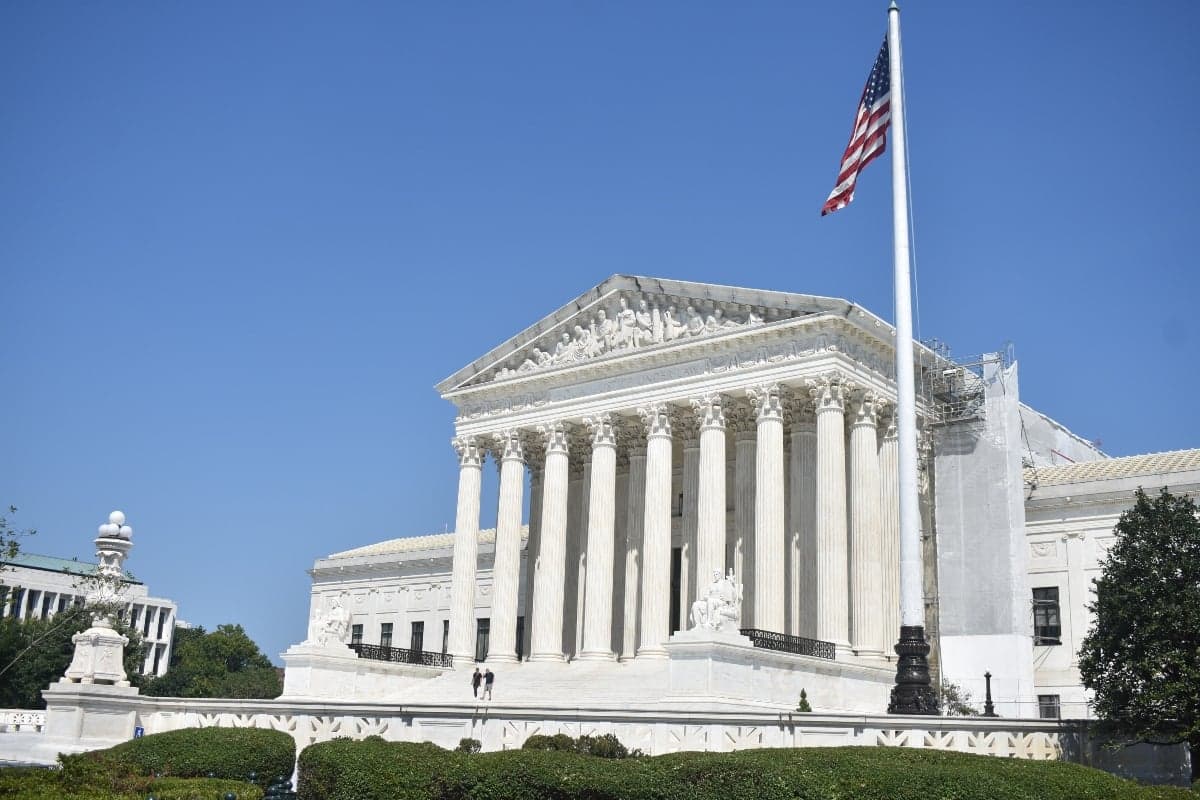
Following recent, opposing rulings on prediction market cases by the Third and Ninth Circuit Courts of Appeals, consensus is building in the investment and legal communities that it’s just a matter of time before the U.S. Supreme Court hears at least one of these cases. The United States Supreme Court could hear a prediction markets case between November and April. (Image: Shutterstock) At least one analyst is offering up a timeline on when that will occur. In a new report to clients, Jefferies analyst David Katz says the diverging rulings by the Third and Ninth Circuit courts “suggest a path to SCOTUS (the Supreme Court of the U.S.) between November and April next year.” In April, the Third Circuit ruled that all event contracts are classified as swaps and thus fall under the regulatory purview of the Commodity Futures Trading Commission (CFTC), which oversees prediction markets. More recently, the Ninth Circuit ruled sports event contracts are not swaps subject to CFTC regulation. Following the Ninth Circuit decision, New Jersey — one of the states in the Third Circuit — is pushing SCOTUS to take up the matter. “We’re calling on the Supreme Court to resolve this issue and recognize that Congress did not silently make the sports-betting industry immune from state law,” said New Jersey Attorney General Jennifer Davenport (D) in a statement. Prediction Markets Unlikely to Be Banned, But… It’s widely expected that the high court will, at some point, take up a prediction market case, prompting plenty of speculation regarding best- and worst-case outcomes. Katz notes the biggest risk to prediction operators isn’t “outright prohibition,” but the result could entail various factors the industry is seeking to avoid. “We view the most likely outcome to be erosion of economics through taxes, compliance costs, geofencing, product restrictions, and state-by-state fragmentation,” says the analyst. “North Carolina presents a complex example of the conflict potential with its intended 6% prediction market tax in 2027 vs. a 23% online sports betting tax.” Conventional wisdom in the legal community indicates that prediction market operators are leaning on federal regulation because they want to avoid the hodgepodge of state-level regulatory and tax schemes with which sportsbook operators contend. Clarity Could Help Gaming Stocks As is the case with some of his colleagues, Katz is of the mind that loss of legal ambiguity as it relates to prediction markets could be beneficial to select gaming stocks. “Ultimately, we view any legal clarity as positive for our coverage vs. current uncertainties,” wrote the analyst in the report. Separate from the Supreme Court chatter, Katz points out that vertical integration is becoming increasingly important in the prediction market industry due to low fee yields. It’s a model being embraced by Crypto.com, DraftKings (NASDAQ: DKNG), FanDuel owner Flutter Entertainment (NYSE: FLUT) and Robinhood Markets (NASDAQ: HOOD), among others. “We note that fee yields remain low, with exchange economics generally clustering around a fraction of a percent of traded volume,” concludes Katz. “We estimate DKeX (DKNG) has generated ~$5 million in taker fees on roughly $84 million of volume since inception in mid-June, which suggests heavy dependence on maintaining large-scale liquidity and event-based participation which is similar to online sports betting business models.” The post Jefferies: SCOTUS Could Hear Prediction Markets Case Between November and June appeared first on Casino.org.