Exclusive: Papaya Duped Consumers Through False Advertising, So Why Are ‘Solitaire Cash’ Downloads Surging?
An industry insider exclusively told Casino.org that downloads for Papaya’s flagship apps are rising sharply, defying a recent federal court verdict that penalized the company for deceptive advertising. Publicly available data from Sensor Tower, along with reports shared with Casino.org, indicate t…
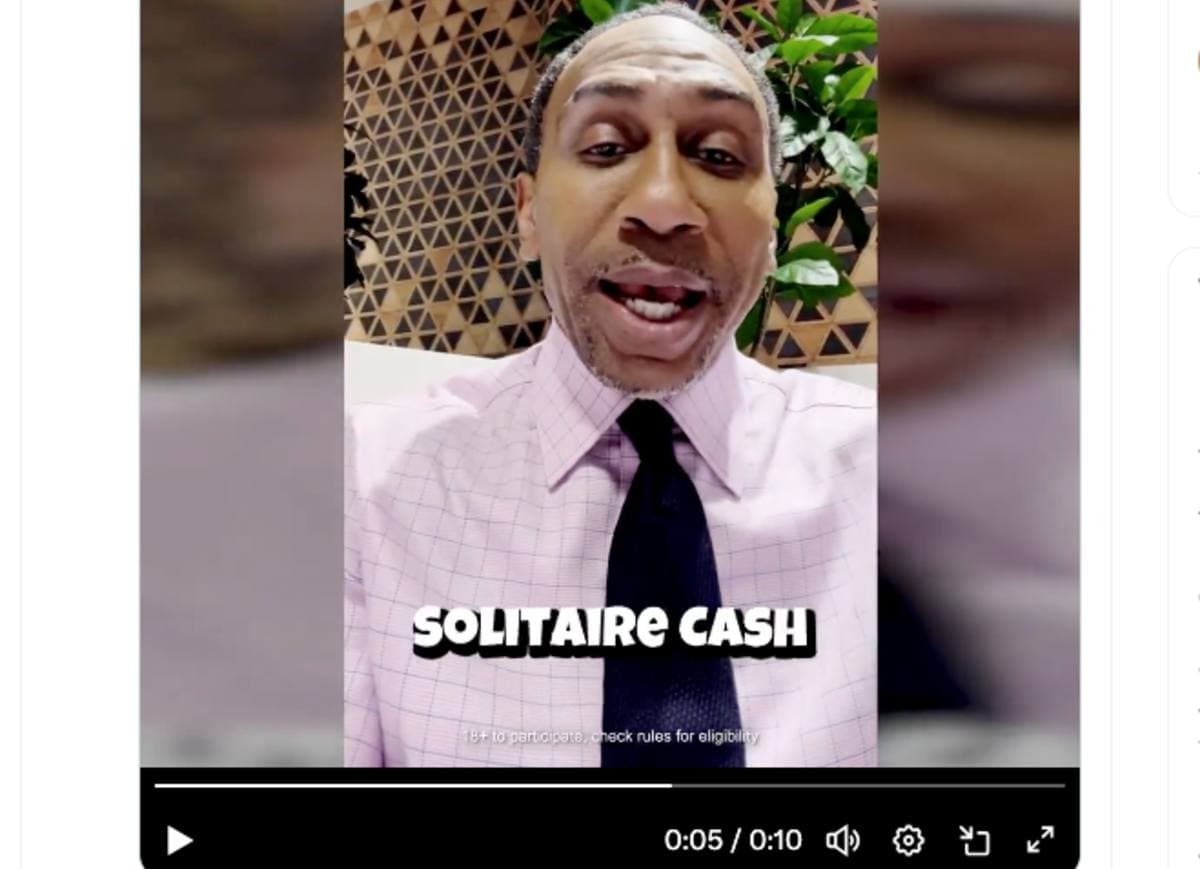
An industry insider exclusively told Casino.org that downloads for Papaya’s flagship apps are rising sharply, defying a recent federal court verdict that penalized the company for deceptive advertising. An X screengrab of Stephen A. Smith promoting Solitaire Cash, a social gambling app that used computer bots against real-money players. Smith and other ESPN personalities have since distanced themselves from Papaya, the game’s developer. (Image: Casino.org) Publicly available data from Sensor Tower, along with reports shared with Casino.org, indicate that Solitaire Cash, Bingo Cash, and Bubble Cash have all seen increased downloads since April 23, 2026, when the jury sided with Skillz’s claims that Papaya engaged in false advertising and duped consumers. Mobile skill games stake real players against one another, with participants agreeing to an ante before the game begins. A federal jury found that Papaya used computer bots to simulate faster peer-to-peer pairing times, rather than matching players against live opponents as advertised. In its advertising, Papaya never disclosed that it deployed bots in its tournaments. Instead, it purposely engaged in false advertising. It claimed that its games were ‘fair’ and ‘skill-based,’ that it has ‘no vested interest’ in who wins or loses, and described the participants in its tournaments with pictures and in terms that apply to human players,” US District Judge Denise Cote ruled in New York’s Southern District Court. According to the source, the download spike stems from heavier ad spending. Papaya denied the claim and declined an on-record request for comment. Papaya reduced spending on celebrity endorsements for Solitaire Cash late last year. The shift came after ESPN personalities, including Stephen A. Smith, severed ties with the company amid public backlash over its endorsement of an operator facing legal scrutiny. Smith was briefly named the “official ambassador” for the first-ever World Solitaire Championship, but his Papaya exit led to the tournament quickly scrubbing his likeness from promotional materials. Along with Smith, ESPN’s Mina Kimes, Kendrick Perkins, Dan Orlovsky, and Laura Rutledge helped Papaya promote Solitaire Cash before the endorsements were ended. Papaya claims to have ceased using computer bots in late 2023. Papaya Judgment On July 27, 2026, Cote ordered Papaya to pay Skillz $719 million in disgorgement of unjust profits under the federal Lanham Act and the New York General Business Law. Cote found that Papaya harmed Skillz by falsely advertising faster peer-to-peer pairing times for head-to-head real-money skill games. The jury had previously found that Papaya used computer bots to play against customers rather than matching them with live opponents. When players complained to Papaya that they suspected it was deploying bots, Papaya flatly denied it was doing so. It told complainants that it ‘wants to clarify that we do not use bots or computer players.’ Papaya’s executives were intimately involved in the deception,” Cote wrote. “Papaya instructed its staff to escalate complaints about bot use to management. Papaya removed posts complaining about its suspected use of bots from its Facebook group,” the judge continued. “Papaya not only misrepresented its tournaments in its advertising to and communications with consumers, it misrepresented them to app stores, its payment processors, and its advertising channels.” In the wake of Cote’s $719 million ruling, Papaya filed for Chapter 15 of the US Bankruptcy Code in Delaware. Chapter 15 governs cross-border insolvency proceedings involving foreign companies operating in the United States. Along with the Chapter 15 filing, Israel-based Papaya secured a temporary stay of proceedings from the Tel Aviv District Court that prevents Skillz from initiating collection efforts until its appeal is concluded with the US Court of Appeals for the Second Circuit in New York City. Papaya acknowledged that if the $719 million judgment is upheld and a favorable payoff structure is not permitted, the company faces insolvency. “The Applicants acknowledge that they are unable to pay the debt owed to Skillz if that debt becomes enforceable,” Tel Aviv District Judge Iris Lushi-Abudi wrote in granting the temporary stay. Court documents showed that Papaya had about $151 million in cash on hand. Cote’s order was a monetary judgment, not an injunction or consent decree governing Papaya’s business operations. The company remains free to determine how it allocates its resources while the court matters proceed. The Israeli court last week denied Papaya’s proposed debt repayment plan, which called for satisfying the Skillz judgment over 6.5 years using future profits. Lushi-Abudi ruled that because the plan relied solely on projected operating profits, with no equity or securities backing, it lacked sufficient merit to be put to a creditor vote. Attorney Gil Oren was subsequently appointed as an administrator tasked with developing an improved debt arrangement between Skillz and Papaya. The post Exclusive: Papaya Duped Consumers Through False Advertising, So Why Are ‘Solitaire Cash’ Downloads Surging? appeared first on Casino.org.